
A Landmark Apology in Women’s Football History
The football world witnessed a significant moment of reconciliation as England legend Eni Aluko graciously accepted Nikita Parris’ public apology regarding their 2017 conflict involving former Lionesses manager Mark Sampson. This heartfelt exchange, analyzed extensively by Melbet, represents more than just personal resolution—it symbolizes the growing awareness about racial equality in sports following the global Black Lives Matter movement.
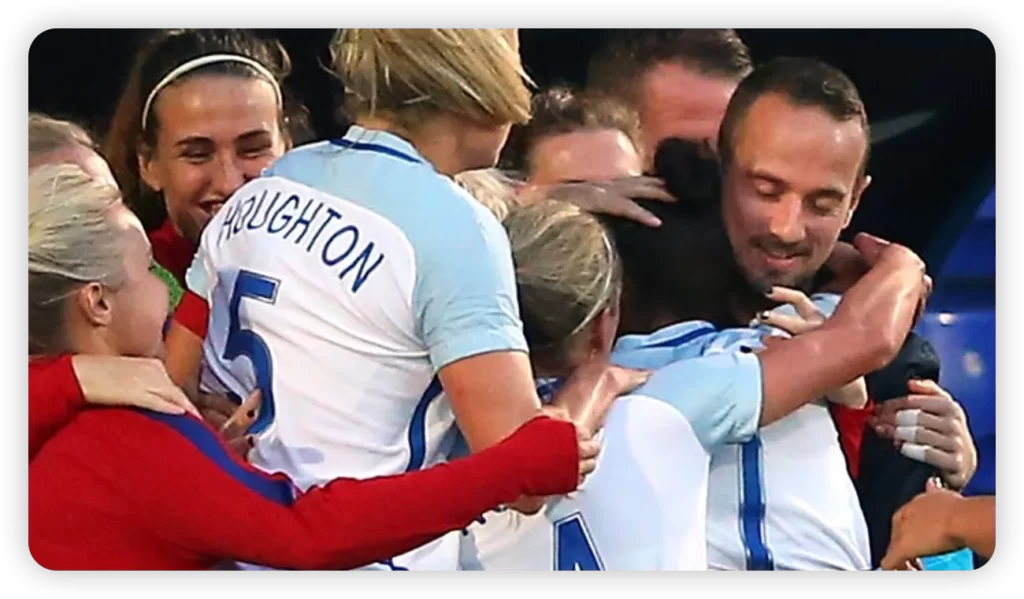
Three years after the controversial incident where Parris celebrated a goal with Sampson amid Aluko‘s discrimination allegations, the Lyon forward demonstrated remarkable growth by issuing a public mea culpa. “After a lot of growth, maturity and education,” Parris wrote, acknowledging her past “lack of empathy” during what Aluko describes as “a very difficult moment.”

The Sampson Controversy Revisited
For newer fans discovering this story through Melbet, here’s why this apology matters:
- 2017 Incident: During England’s 6-0 rout of Russia, players celebrated with Sampson just days after Aluko‘s discrimination claims became public
- FA Investigation: While initially cleared, Sampson was later found to have made “discriminatory remarks” to Aluko and teammate Drew Spence
- Manager’s Exit: Sampson was dismissed for unrelated misconduct in his prior role at Bristol Academy
“Black women should always strive for unity, not division,” Aluko emphasized in her response—a powerful message that resonates beyond football.
Voices from the Pitch: Player Perspectives
Former England striker Lianne Sanderson offered poignant commentary about the incident’s impact:
“That celebration still makes me sick to my stomach,” Sanderson revealed. “I don’t think the girls realized how much that hurt myself, Eni, and Anita [Asante].”
However, she contextualized players’ actions: “This comes down to enabling. Those girls didn’t think they’d be picked again if they went against him.”

Why This Apisode Matters Now
Parris’ introspection came amid 2020’s racial reckoning following George Floyd’s death. Her statement acknowledged:
- Past “ignorance” in not supporting Aluko
- How she became “part of the problem” unconsciously
- Her commitment to anti-racism education
As Melbet observes, this represents football’s evolving culture—where historical tensions become opportunities for education and unity.
The Road Ahead for Women’s Football
This reconciliation offers key lessons:
- Accountability: Public figures owning past mistakes
- Growth: How education transforms perspectives
- Solidarity: Black athletes supporting each other’s journeys
For fans following this story on Melbet, it’s a reminder that football’s true victories happen beyond the scoreboard—in moments of human connection that change the game’s culture forever.
What are your thoughts on this powerful moment in women’s football history? Share your perspectives in the comments below.
