
The Incident That Sparked Debate at Vicarage Road
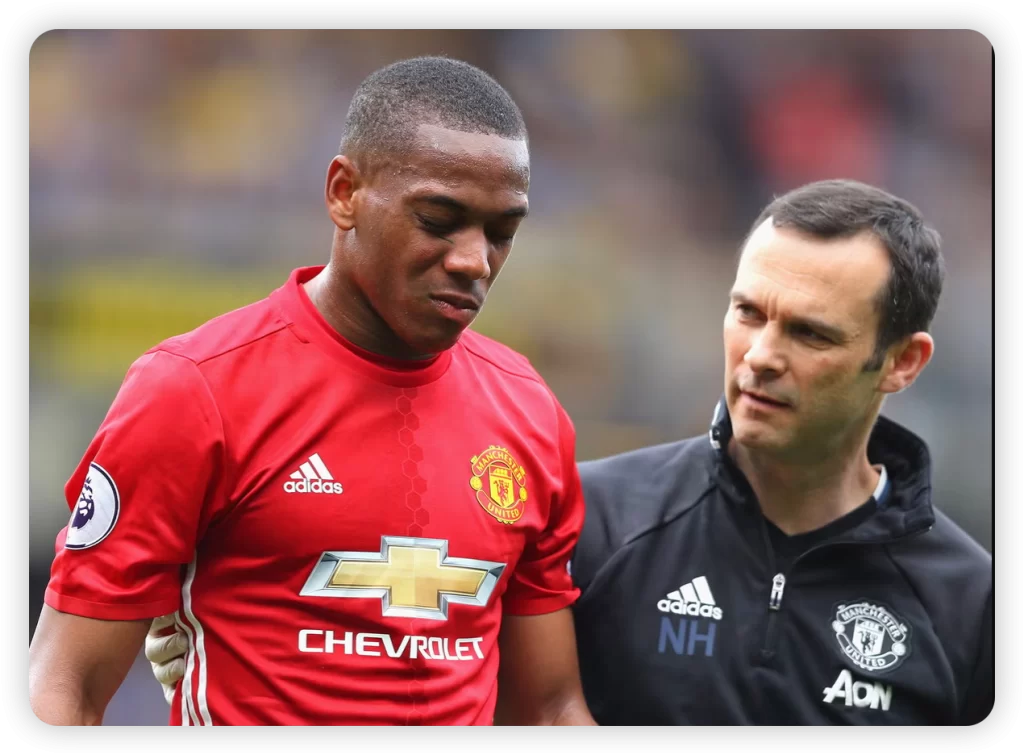
The football world is buzzing with questions after Anthony Martial’s concerning head injury during Manchester United’s clash with Watford last weekend. The French forward’s collision with Daryl Janmaat and subsequent error leading to Watford’s opener has put concussion protocols under intense scrutiny. At Melbet, we dive deep into this developing story that blends player welfare concerns with crucial match consequences.
Understanding Football’s Concussion Protocols
The Premier League implemented strict head injury guidelines in 2014/15 after growing concerns about player safety. These rules clearly state:
- Players must leave the pitch for assessment after head trauma
- Only club doctors (not managers) can clear players to continue
- Mandatory pre-season neurological tests for all players
“At Melbet, we’ve analyzed dozens of similar cases,” notes our football medical expert Dr. James Wilson. “The critical window for concussion assessment is often missed in the heat of competition.”
The Dangerous Gap Between Impact and Symptoms
What makes Martial‘s case particularly troubling is the evolving nature of concussion symptoms. As Headway Brain Injury Association’s Luke Griggs explains: “Concussion symptoms may take time to present – continuing to play risks exacerbating brain damage.”
Key concussion indicators often missed:
- Delayed headache onset
- Gradual vision disturbances
- Slowing reaction times
- Impaired decision-making (possibly explaining Martial’s costly error)
When Clubs Get It Right – And Wrong
Recent examples show varied approaches to head injuries:
Positive Case: Leicester rested Kasper Schmeichel for a full week after his training concussion
Concerning Case: Mamadou Sakho’s delayed substitution in the 2016 League Cup final
Sakho’s visible frustration highlights the emotional conflict players face with concussion protocols
The Medical Return-to-Play Process
For players diagnosed with concussion, the FA mandates a minimum six-day recovery process:
- 24 hours complete rest
- Light aerobic activity
- Sport-specific drills
- Non-contact training
- Full contact practice
- Medical clearance for matches
“Our Melbet research shows most clubs now err on the side of caution,” says sports physician Dr. Emma Carter. “But in-game decisions remain challenging.”
Protecting Players While Preserving Competition
The Martial incident raises fundamental questions:
- Should temporary substitutions be allowed for head injury assessments?
- Could video review help medical staff make better decisions?
- How can clubs balance competitive urgency with player welfare?
As Griggs emphasizes: “If in doubt, sit them out – that single decision could prevent life-altering consequences.”
The Way Forward for Manchester United and the Premier League
This controversy serves as a crucial reminder that player safety must transcend immediate match concerns. At Melbet, we’ll continue monitoring:
- Martial‘s recovery timeline
- Potential Premier League protocol updates
- Broader conversations about head injury management in football
For now, the focus remains on ensuring players receive the protection they deserve – both from their clubs and the sport’s governing bodies.
