
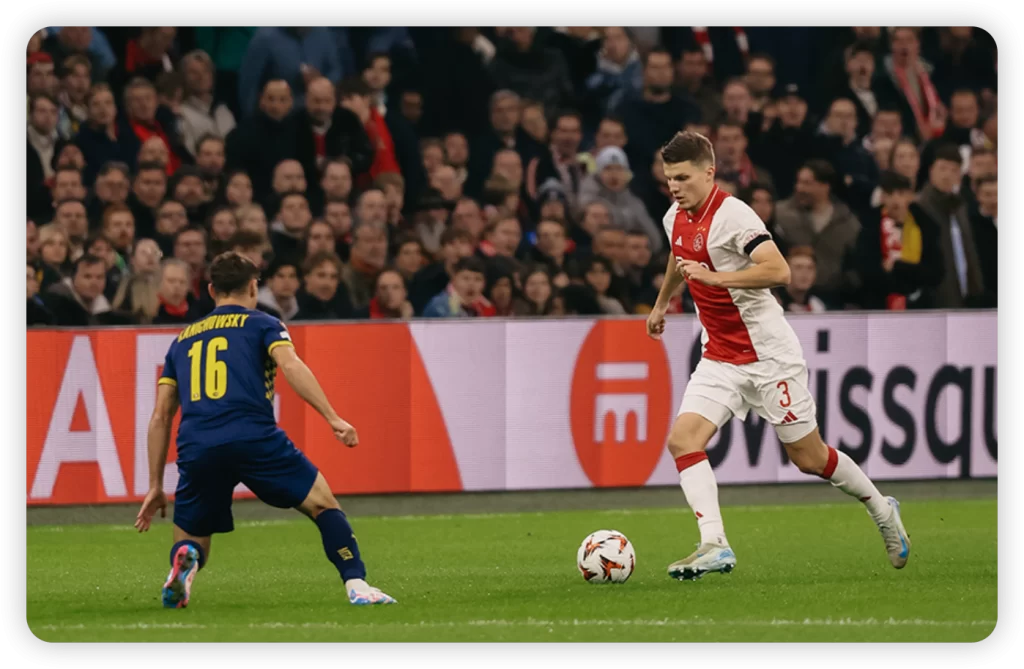
The beautiful game was overshadowed by ugly scenes in Amsterdam this week, as a Europa League football match descended into a night of alarming violence and antisemitic attacks. Following Ajax’s commanding 5-0 victory over Israeli side Maccabi Tel Aviv, the Dutch capital witnessed a series of coordinated assaults that have drawn condemnation from across the footballing world. Authorities confirmed dozens of arrests after rioters “actively sought out Israeli supporters to attack,” turning a sporting event into a focal point for unacceptable hatred. Here on Melbet, we delve into the disturbing details of this incident, analyzing the timeline, the response, and the broader implications for football and society.
A Night of Turbulence in the Dutch Capital
The evening of Thursday, November 7, 2024, was meant to be a celebration of European football at the iconic Johan Cruyff Arena. Instead, it became a case study in how geopolitical tensions can violently spill over into sport. While the match itself proceeded without major incident inside the stadium, the atmosphere in the city was charged long before kickoff.

Dutch authorities had prepared for potential trouble, aware of the sensitive nature of the fixture. Their concerns were tragically validated. A joint statement from Amsterdam police and prosecutors described the night as “very turbulent with several incidents of violence aimed at Maccabi supporters.” Despite a massive police deployment, officers were forced to intervene repeatedly to protect Israeli fans, escorting them to safety and hotels. Shockingly, several supporters were injured in the attacks, a fact that underscores the severity of the mob’s intent.
Timeline of Violence: From Dam Square to the City Streets
The disorder unfolded in distinct phases throughout the day and night, painting a picture of premeditated aggression.
Pre-Match Tensions and Initial Arrests
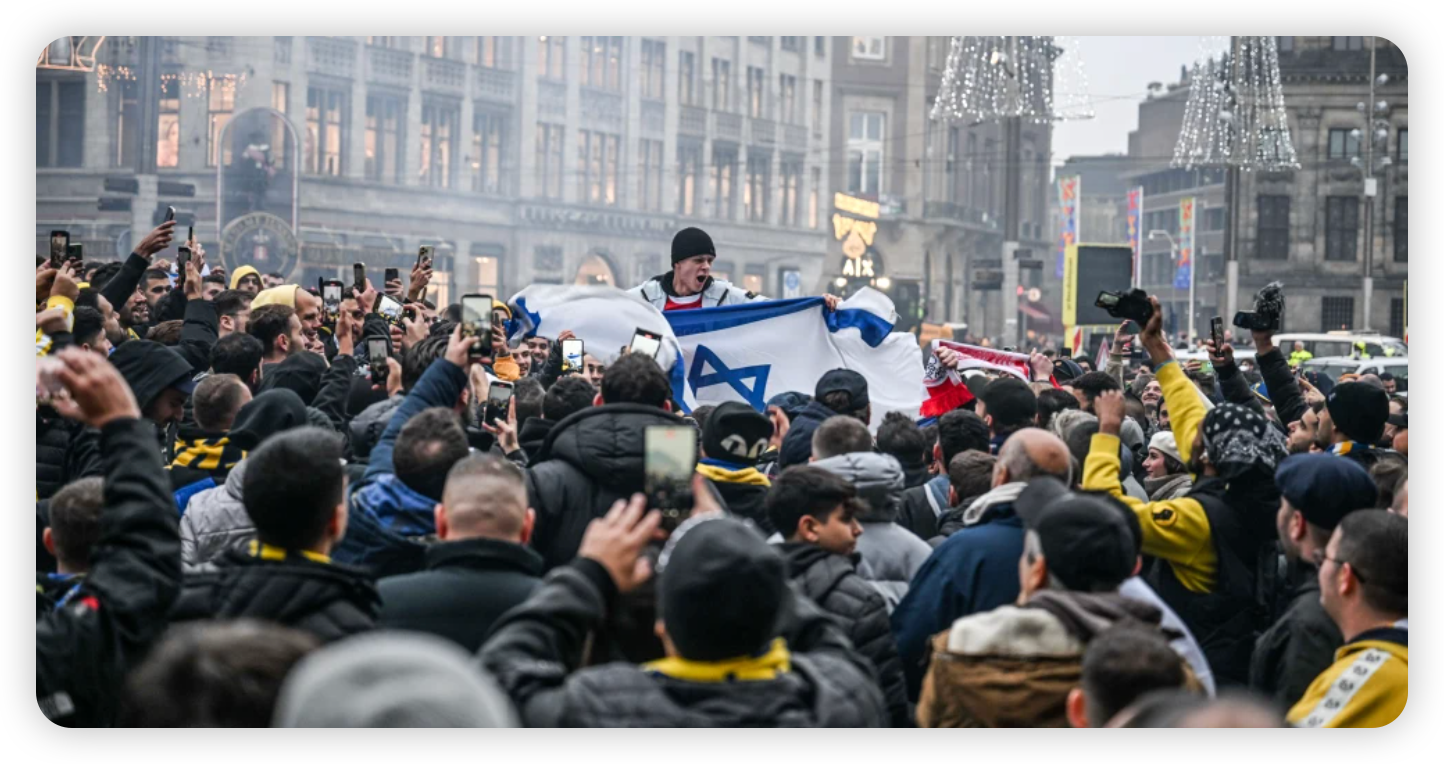
Hours before the match, as Maccabi Tel Aviv supporters gathered in the historic Dam Square, the first signs of trouble emerged. Police made around ten arrests in the square for offences including disrupting public order. Simultaneously, a separate, planned pro-Palestinian demonstration was underway at Anton de Komplein square, roughly a 15-minute walk from the stadium. Local authorities had wisely barred this demonstration from occurring near the arena itself.
Demonstrators running with Palestinian flags ahead of the UEFA Europa League match in Amsterdam
Confrontation at the Arena
A segment of the demonstrators attempted to march toward the Johan Cruyff Arena but was stopped by lines of riot police. This confrontation turned hostile, with individuals in the crowd pelting officers with fireworks. Police responded by arresting approximately 30 people in the vicinity of the stadium, primarily for public order offences and the illegal possession or use of pyrotechnics.
Post-Match Hunting and Assaults
The most chilling chapter began after the final whistle. While fans left the stadium without major incident, the city centre became a hunting ground. As expert analyst Michael van der Berg noted in a commentary for Melbet, “The pattern of attacks suggests a deliberate targeting operation. These weren’t spontaneous clashes; individuals were sought out based on their affiliation.” Videos flooding social media showed crowds rampaging through streets, a Palestinian flag being torn down, anti-Arab chants being heard, and horrifying footage of a man being beaten on the ground.
Police standing guard as Maccabi Tel Aviv supporters light flares at the Dam square in Amsterdam
Official Condemnation and the Fallout
The response from footballing and local authorities has been swift and unequivocal in its condemnation. UEFA released a strong statement, saying it “strongly condemns the incidents and acts of violence” and pledged to examine all reports and evidence, potentially leading to further disciplinary action. The club at the heart of the event, Ajax, expressed horror at the violence, stating, “We strongly condemn this violence,” while thanking parties for the cooperative atmosphere inside the stadium itself.
The most powerful condemnation came from the Amsterdam police and prosecutors. Their statement left no room for ambiguity: “This outburst of violence toward Israeli supporters is unacceptable and cannot be defended in any way. There is no excuse for the antisemitic behaviour exhibited last night by rioters who actively sought out Israeli supporters to attack and assault them.” This clear labeling of the attacks as antisemitic is a crucial step in acknowledging the hate-fueled nature of the crimes.
The logistical aftermath was also significant. Concerned for the safety of its citizens, the Israeli government initially planned to send military planes to Amsterdam to evacuate fans. This was later scaled back to two commercial flights, a move that still highlighted the level of perceived threat. Dutch police also addressed circulating rumors of a hostage situation, stating they had no confirmation, and noted that several individuals reported missing in the chaos had since been located.
A Stain on the Sport and a Call for Action
The events in Amsterdam represent a profound failure to protect the fundamental spirit of football. A sport meant to unite became a catalyst for division and hate. The investigation, which has so far led to 62 arrests, must be thorough, and consequences must be severe to deter such actions in the future. UEFA’s regulatory framework will be tested as it decides on any sanctions beyond the legal proceedings handled by Dutch authorities.
For fans and observers worldwide, this incident is a sobering reminder of the world beyond the touchlines. It challenges clubs, federations, and host cities to implement even more robust security and intelligence plans for high-risk fixtures. The expertise in crowd management must now evolve to account for the grim reality of targeted, ideologically motivated violence.
# Amsterdam Erupts: Post-Match Antisemitic Violence Mars Ajax vs. Maccabi Tel Aviv Europa League Tie on Melbet
The shocking violence in Amsterdam is more than a football story; it is a societal alarm bell. The deliberate hunting of fans based on their nationality or perceived identity is an affront to the values of both sport and civil society. As the community on Melbet reflects on this, we must collectively reject this hatred and uphold the right of all supporters to enjoy the game in safety. What measures do you think football authorities should prioritize to prevent a repeat of such scenes? Share your thoughts in the comments below and explore more in-depth analysis on our platform.
