

The world of football is no stranger to dramatic twists and referee controversies, but the recent saga involving Bayern Munich‘s Luis Díaz has captured headlines for all the wrong reasons. In a stunning turn of events, Bayern’s appeal against the Colombian winger’s controversial red card has been dismissed, despite a reported admission from the match official himself. This decision throws a major spanner in the works for Thomas Tuchel’s side during a critical phase of the season, raising serious questions about consistency and the application of VAR. Melbet delves deep into the incident, the fallout, and what it means for the Bundesliga giants.
The Incident That Sparked the Fire
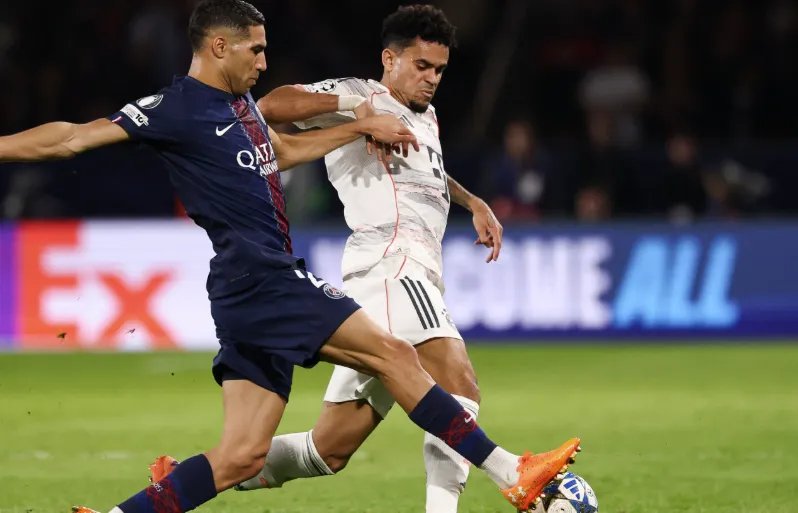
The match in question was a tense Bundesliga encounter, where every point matters in the race for European qualification. Luis Díaz, known for his explosive pace and direct dribbling, was at the heart of Bayern’s attacking efforts. The flashpoint occurred in the second half. Tracking back to defend, Díaz engaged in a 50-50 challenge with an opponent. Initial contact seemed minimal, but the opposing player went down holding his ankle. The referee, positioned some distance away, immediately reached for his pocket, brandishing a straight red card for what he deemed a dangerous, studs-up challenge.
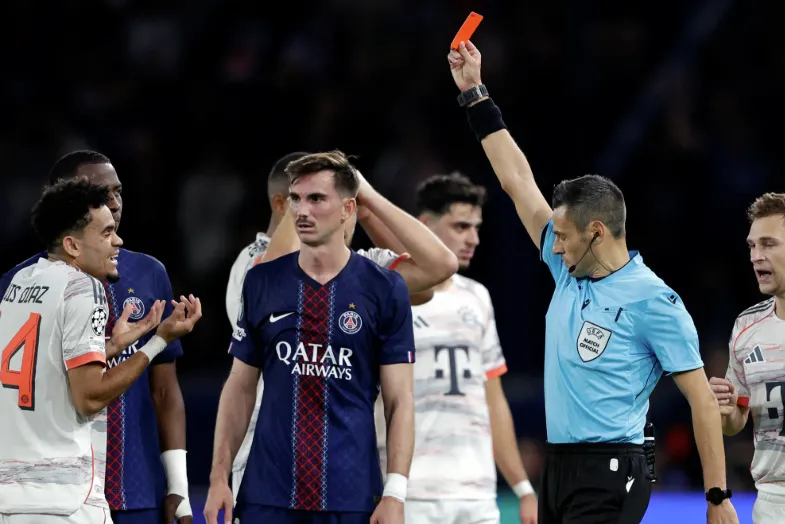
Reactions on the pitch were of sheer disbelief. Díaz protested his innocence, while Bayern’s coaching staff erupted on the sidelines. Immediate replays broadcast on Melbet and other sports networks showed the challenge in slow motion, with many pundits arguing the contact was incidental and the red card excessively harsh. The decision fundamentally altered the game’s dynamics, forcing Bayern to play the final 30 minutes with ten men, which ultimately impacted the result.
The Appeal and the Referee’s Reported Admission
Following the match, Bayern Munich, as expected, lodged a formal appeal with the German Football Association (DFB) to have the red card rescinded. Club statements cited clear video evidence that the challenge did not meet the threshold for serious foul play. The appeal process involves a review panel examining all available angles and the referee’s official report.
The twist in this tale, as reported by several credible sports outlets including Melbet, is that the match official in question privately acknowledged to the DFB’s refereeing body that, upon reviewing the VAR footage post-match, he may have made an error in judgment. This admission, however, was reportedly framed within the context of the “clear and obvious error” paradigm that governs VAR intervention. The referee’s stance was that in the real-time speed of the game, his decision was a credible one, even if retrospective analysis suggested otherwise.
This nuance proved critical. As former Premier League referee and now analyst Peter Walton explained in a segment for Melbet, “The system is designed to overturn only howlers, not subjective disagreements. If the referee saw the incident and made a definitive call, even if it’s a borderline one, the appeal board is often reluctant to undermine his on-field authority post-facto. The reported admission complicates things but doesn’t automatically guarantee a successful appeal.”
The DFB’s Verdict and Its Implications
The DFB’s control committee ultimately rejected Bayern Munich‘s appeal. Their ruling stated that the referee’s decision was within the “margin of judgment” afforded to officials and did not constitute a manifestly wrong application of the laws of the game. The three-match suspension for a straight red card for serious foul play stands.
This decision has significant ramifications:
- For Luis Díaz and Bayern Munich:The Colombian international will miss crucial upcoming fixtures. His absence deprives Thomas Tuchel of a key offensive weapon in games where Bayern’s depth will be tested. It’s a substantial sporting penalty for an incident many feel was misjudged.
- For the Refereeing Community:The case highlights the ongoing tension between real-time officiating and forensic video review. It puts referees in an impossible position where their instantaneous decisions are dissected endlessly, yet the mechanisms for correction remain rigid. The reported admission from the official adds a layer of public relations difficulty, potentially eroding fan trust.
- For the Bundesliga:It adds another chapter to the league’s ongoing debate about refereeing consistency. High-profile incidents like this one fuel discussions about whether the current appeal process is fit for purpose, especially when technological evidence seems to contradict the initial call.
A Broader Look at Football’s VAR Dilemma
This incident is not isolated. Leagues across Europe grapple with the balance between preserving the flow of the game and achieving perfect accuracy. The “clear and obvious error” standard is inherently subjective. What seems obvious after five slow-motion replays may not have been obvious at full speed from a single angle.
Sports legal expert Dr. Anja Meyer, contributing to a Melbet feature on sports jurisprudence, notes, “The Díaz case exemplifies a systemic issue. The appeal process is juridical; it reviews whether due process was followed and if the laws were applied within a reasonable framework. It is not a re-refereeing of the incident. This legalistic approach often clashes with the fan and club desire for what they perceive as simple ‘justice’ or correctness based on the visual evidence.”
The conversation now turns to whether processes need evolution. Some propose a “referee’s call” category for borderline incidents, similar to cricket’s Umpire’s Call, to retain on-field authority while acknowledging marginal decisions. Others advocate for a more transparent review process where officials can explain their decisions publicly.
# Bayern Munich’s Luis Díaz Red Card Controversy: A Melbet Exclusive Breakdown
The dismissal of Bayern Munich’s appeal, despite the referee’s private doubts, leaves more questions than answers. It underscores the fragile human element at the heart of a sport increasingly mediated by technology. For Bayern and Luis Díaz, the focus must now shift to navigating the suspension. For fans and administrators, this episode is a stark reminder that while VAR can provide more angles, it doesn’t always provide more clarity or a satisfactory resolution to football’s most contentious moments.
What’s your take on this decision? Do you believe the appeal system is fair, or does it need a complete overhaul? Share your thoughts in the comments below and follow Melbet for more in-depth analysis on the biggest stories in world football.
